2026-09-22 ·
Is a Sparking Outlet an Electrical Emergency?
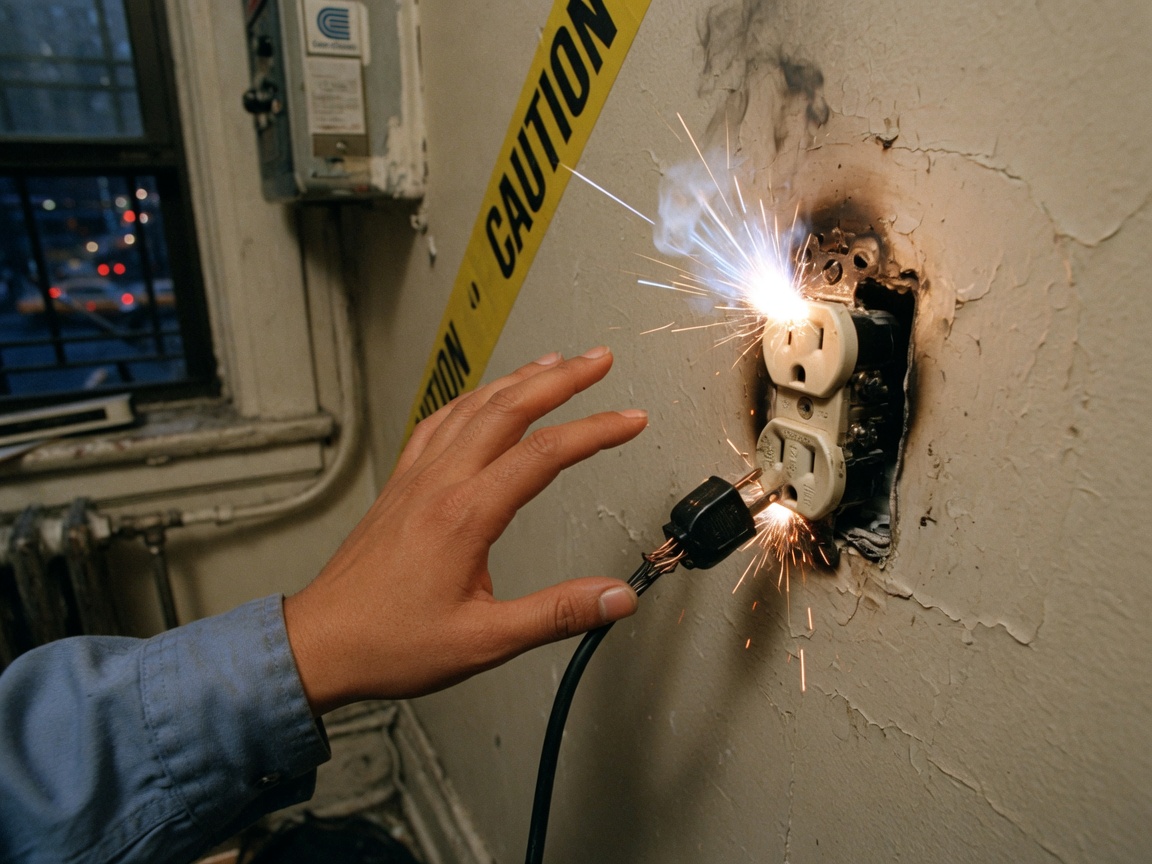
Yes, a sparking outlet is an electrical emergency. The visible arc indicates loose connections or damaged wiring that can reach ignition temperatures within seconds, especially in New York City buildings where pre-war knob-and-tube or aluminum wiring remains common.
Understanding the Risks in NYC Buildings
New York City housing stock includes thousands of pre-1940 structures with original wiring that has never been updated. In Manhattan and Brooklyn, these systems handle modern loads from air conditioners, computers, and kitchen appliances that exceed their original design capacity. Humidity from summer months and salt air near the waterfront accelerate corrosion on terminals, increasing resistance and heat buildup. A single spark can travel along hidden runs inside plaster walls or between floor joists, turning into a hidden fire that spreads before smoke detectors activate. Older panel boxes in Queens and the Bronx often lack proper grounding, so fault current has no safe path and instead arcs at the outlet. These conditions turn a routine outlet issue into a structure-threatening event within minutes.
Common Triggers for Sparking Outlets
Loose wire nuts behind outlets loosen further from daily plug insertions and building vibration along subway lines. In high-rises, shared neutral conductors can overload during peak evening hours when residents return home. Aluminum wiring, found in many 1960s and 1970s apartments, expands and contracts with temperature swings, creating gaps that produce visible sparks. Overloaded power strips used for holiday lights or home offices compound the problem in small studio layouts common throughout the city. Water intrusion from roof leaks or bathroom condensation reaches outlet boxes in older walk-ups, corroding contacts until arcing begins. Each of these factors appears regularly during service calls across the five boroughs.
Safe Response Steps
Disconnect the load at the breaker if you can reach the panel safely, then unplug everything from the affected outlet. Avoid touching the outlet cover or using the switch. Open windows for ventilation but do not attempt to spray water or use extinguishers rated only for Class A fires. Note the exact location and any burning smell so the responding technician can isolate the circuit quickly. If the sparking continues after the breaker is off or you smell smoke, evacuate and call 911 before contacting an emergency electrician. These steps limit exposure while waiting for on-site assessment.
Professional Assessment and Repair
A 24 hour electrician begins by isolating the circuit and testing voltage drop across the run, then removes the outlet to inspect for melted insulation or charred backstabs. In many cases the repair involves replacing the outlet with a tamper-resistant model and adding pigtails to secure connections. When aluminum wiring is present, the technician installs CO/ALR rated devices or pigtails with antioxidant compound. For repeated issues in the same panel, outlet repair often leads to discussion of a full electrical panel upgrade. Homeowners in similar situations also read What to Do When Your Lights Start Flickering and Why Your Circuit Breaker Keeps Tripping for related guidance on hidden faults.